Sewing Tools Black and White Line Art Review
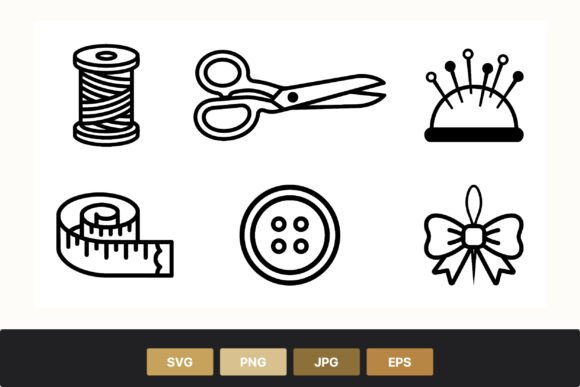
As a designer who has spent years translating digital concepts into tangible stitched goods, I approach every new machine embroidery design with a mix of excitement and skepticism. The gap between a clean vector on a screen and the reality of thread on fabric can be wide. Recently, I evaluated a set titled Sewing Tools Black and White Line Art, a collection of graphics featuring scissors, measuring tape, buttons, pin cushions, thread spools, and decorative bows. On paper, it sounds like a staple for any craft business, but does it hold up when you actually load it into your machine? Let's dive into how this specific asset performs in real-world scenarios.
The First Impression: Minimalism Meets Utility
When I first opened the package to review these Illustrations, the mood was immediately clear: professional, crisp, and timeless. Unlike many trendy designs that rely on complex shading or gradients, this set leans heavily on strong outlines and negative space. For an embroidery file, this is often a blessing. Complex gradients often translate poorly into fill stitch or satin stitch, resulting in muddy textures. These black and white line art icons, however, are built on structure. The scissors have distinct blades, the measuring tape shows clear gradations, and the button details are defined without being cluttered.
Visually, the layout feels balanced. The inclusion of a decorative bow alongside functional tools like the pin cushion creates a nice contrast between utility and charm. This suggests the design assets are versatile enough for both serious branding materials and softer, more whimsical handmade products. As a reviewer, my initial thought was that this would work exceptionally well as a logo mark for a sewing shop or as a subtle accent on high-end custom apparel.
Testing the Design: A Real-World Tote Bag Scenario
To truly understand the value of Sewing Tools Black and White Line Art, I imagined a specific project: creating a limited run of canvas tote bags for a local boutique. The goal was to produce a tote bag design that felt artisanal yet durable. I visualized placing the scissors and thread spool icons in a vertical column on the side of the bag.
In this context, the simplicity of the line art becomes its greatest strength. Because the design relies on outlines rather than dense fills, it allows the texture of the canvas to show through slightly, adding depth to the finished product. If I were using a heavy-weight thread, perhaps a size 40 or 30, the bold lines of the measuring tape and pin cushion would stand out beautifully against the natural beige of the canvas. The lack of intricate inner details means there is less risk of the thread bunching up, which is a common issue when embroidering on thick fabrics.
Furthermore, for an Etsy seller looking to create a cohesive brand identity, these graphics offer a consistent aesthetic. You could use the same line art style across different items—perhaps a smaller version on a pillow cover or a larger arrangement on a kitchen apron. The visual consistency builds trust with customers who recognize the brand's "look" instantly. It signals professionalism without needing expensive marketing copy.
Navigating Challenges: Where Caution Is Needed
While the design is robust, it is not without its pitfalls. As a practical designer, I must point out where Sewing Tools Black and White Line Art requires careful handling. The very nature of line art means that if the stitch density is too low, the lines might look broken or weak, especially on textured fabrics like denim or fleece. Conversely, if the density is too high, you risk puckering, particularly on thin materials used for baby embroidery or delicate scarves.
Another critical consideration is the hoop size. While individual icons like the button or the bow are small, arranging them together requires precise spacing. If you attempt to fit the entire set onto a small cap or a curved surface without adjusting the scale, the details of the pin cushion pins or the thread spool ridges could get lost. Curved surfaces distort flat graphics; what looks perfect on a flat mockup might appear stretched on a baseball cap. Always test the design on scrap fabric first to see how the curves affect the integrity of the lines.
Color choice is also paramount. Since this is black and white line art, the thread colors you choose will define the final impact. Using black thread on dark fabric is a recipe for invisibility. You need high contrast. Imagine using a bright gold or electric blue thread for the outlines against a navy sweatshirt. That pop of color transforms the simple Graphics into a statement piece. However, on light fabrics, standard black thread offers a classic, sophisticated look that never goes out of style.
Strategic Application for Craft Businesses
For the small shop product creator or the creative entrepreneur, this design set opens several revenue streams. Beyond just embroidery, these images serve as excellent printable mockups for showcasing your other work. You can place these icons on digital previews of your services to give clients a taste of your aesthetic before they commit to a purchase.
Consider the potential for holiday embroidery. A set of sewing tools arranged around a festive message makes for a unique gift for fellow crafters. Think about personalized gifts for wedding planners or fashion students. An embroidered patch featuring the scissors and measuring tape could be sewn onto a portfolio case or a tool roll. The design is specific enough to resonate with the target audience but generic enough to appeal to anyone who appreciates the craft.
However, always remember to check the licensing terms. Are you allowed to sell the digital embroidery file itself, or only the finished physical items? Many designers restrict the resale of the file, allowing only the sale of the handmade product. Clarifying this before launching a commercial embroidery line protects your business from legal headaches down the road.
Practical Designer Notes for Success
If you decide to incorporate Sewing Tools Black and White Line Art into your workflow, here are my top recommendations based on experience:
- Test on Scrap Fabric: Never skip this step. Run the design on a similar weight fabric to your final project to check for puckering or gaps in the lines.
- Use Proper Stabilizer: Line art relies on precision. A tear-away stabilizer might leave residue, while a cut-away provides better support for long-term durability on items like aprons or sweatshirts.
- Check Thread Contrast: Ensure your chosen thread color pops against the background fabric. Test swatches under different lighting conditions.
- Inspect Small Details: Zoom in on the digital preview. Are the pins on the cushion distinct? Is the text on the measuring tape legible? If not, consider simplifying further or increasing the size.
- Verify Licensing: Confirm whether the license covers commercial use for personalized gifts and retail items before listing them on your shop.
In conclusion, Sewing Tools Black and White Line Art is a solid addition to any designer's library. It strikes a balance between simplicity and detail that works well for a variety of applications, from embroidered patches to full-scale custom apparel. By understanding its strengths and limitations, you can leverage these graphics to create professional, high-quality products that stand out in a crowded market. Whether you are a hobbyist making gifts for friends or a business owner scaling your production, this design set offers the versatility needed to bring your creative vision to life.